

2026-2027 PROGRAM YEAR THEME
Endless Becoming
From September to May each year, DSPP provides continuing education opportunities to mental health professionals in Dallas-Fort Worth area. These opportunities correspond to a yearly theme, determined by the DSPP President.
Monthly meetings generally occur on the third Wednesday of the month from 7pm-9pm, September thru November, and February through April, though there is some variation depending on other events. Monthly meetings are included in membership.
Workshops, which are longer educational opportunities, tend to occur on weekends and are purchased separately.
In addition, the Arts Committee provides opportunities to explore various artistic media through a psychoanalytic lens, these events often incorporating food, drinks, and socializing.
DSPP has a rich tradition of hosting some of the worlds leading psychoanalytic thinkers.
Click Program Statement below to learn more on this year’s programming!
All members RECEIVE free monthly meetings.
Click here for information on how to join Dallas Society for Psychoanalytic Psychology.
upcoming MONTHLY MEETINGS


SEPTEMBER MONTHLY MEETING: All the World’s a Group
$15.00
We are such stuff as dreams are made on — The Tempest
Date: Wednesday, September 16th, 2026: 7:30pm-9:00pm (Refreshments provided at 7:00pm)
Credits: 1.5 CE
Speakers:Dale C. Godby, PhD, and Melissa Black, PhD
Meeting is IN PERSON ONLY:
The Center for Integrative Counseling & Psychology
4305 MacArthur Ave.
Dallas, TX 75209
All the World’s a Group
Dale C. Godby, PhD, and Melissa Black, PhD, will host a Social Dreaming Matrix (SDM), followed by a Median Dialogue Group, to begin our exploration of Endless Becoming.
The Social Dreaming Matrix
For those who are new to the Social Dreaming Matrix, participants are invited to share dreams. The focus is on the dream—not the dreamer.
Dreams are offered as gifts to the group. They are not interpreted individually; instead, participants freely associate to them, allowing one dream to stimulate the recollection and telling of other dreams, whether current or from the past. In this way, the dreams begin to speak to one another.
The unconscious is a major source of creativity. The Social Dreaming Matrix offers a way of being in the unconscious and continuing the processes of thinking that occur while we are asleep—when the boundaries of concrete knowledge become more permeable and new possibilities for thought can emerge.
Learning Objectives
The Primary Task of the Social Dreaming Matrix
1. To transform the knowledge contained within the dreams of the Matrix.
2. To work through free association.
3. To make links and discover connections among the dreams.
4. To remain available for new thinking.
After 30 minutes of social dreaming, we will convene a median dialogue group to further explore the themes that emerged in the SDM around the year’s theme of Endless Becoming.
Speaker Bios
Dale C. Godby, PhD—was the fourth president of DSPP and is a founding member of the Group Analytic Practice of Dallas since 2001. He recently returned from the Group Analytic Society International in Athens, Greece where he hosted a social dreaming matrix and median group with German colleagues and led a workshop with Melissa Wallace, MD on co-therapy. He is grateful for DSPP and its contribution to his Endless Becoming…
Melissa Black, PhD—is a past president of DSPP and is a founding member of the Group Analytic Practice of Dallas since 2001. She enjoys bringing variations of group to people, notably running T-Groups at UTSW and conducting workshops in a variety of international settings in addition to running therapy groups in her practice. Recently returning from the Group Analytic Society International meeting in Athens, Greece where she and Drs Melissa Wallace and Carla Pulliam presented a workshop titled “Reclaiming Her-Story – Trust, Storytelling, and Identity Development in a Woman’s Process Group”, she looks forward to what will emerge from the DSPP membership in this group experience.
Reading:
Social Dreaming International Network
https://socialdreaminginternational.net/
Juchau, Mireille. “How Dreams Change Under Authoritarianism: Charlotte Beradt’s ‘The Third Reich of Dreams.’” The New Yorker, November 7, 2019.
https://www.newyorker.com/books/second-read/how-dreams-change-under-authoritarianism
Group Analytic Society International. “The Median Group.”
https://groupanalyticsociety.co.uk/the-median-group/
Rogers, Cynthia. “Engaging with the Median Group.” Group Analysis, vol. 46, no. 2, 2013, pp. 183–195.
Godby, Dale C. “Introducing Median and Large Group in the Training of Psychiatrists.” Group Analysis, 2015.
NOVEMBER MONTHLY MEETING: The Family Web
$15.00
The Family Web
The web of our life is of a mingled yarn, good and ill together
— All’s Well That Ends Well
Monica McGoldrick, MA, LCSW, PhD will discuss Freud’s genogram after hearing Radhi Dani, MD Sivan Peleg, MA, and Beverly Bonnheim, MSW present an imagined analysis of Freud at the ages of 29, 40, and 83. (1.5 CEUs)
Date: Wednesday, November 18th, 2026: 7:30pm-9:00pm (Refreshments provided at 7:00pm)
Credits: 1.5 CE
Speakers: Monica McGoldrick, MA, LCSW, PhD, Radhi Dani, MD Sivan Peleg, MA, and Beverly Bonnheim, MSW
Meeting is both on Zoom & in-person at:
The Center for Integrative Counseling & Psychology
4305 MacArthur Ave.
Dallas, TX 75209
Zoom link will be sent out via registered email within 24 hours of meeting.
JANUARY MONTHLY MEETING: When the Patient Appears in the Therapist’s Dreams
$15.00
When the Patient Appears in the Therapist’s Dreams
To sleep, perchance to dream. Ay, there’s the rub,
For in that sleep of death what dreams may come,
— Hamlet
Steve Scherffius, MD will present on working therapeutically with the therapist’s dreams. (1.5 CEUs)
Date: Wednesday, January 20th, 2026: 7:30pm-9:00pm (Refreshments provided at 7:00pm)
Credits: 1.5 CE
Speakers: Steve Scherffius, MD
Meeting is both on Zoom & in-person at:
The Center for Integrative Counseling & Psychology
4305 MacArthur Ave.
Dallas, TX 75209
Zoom link will be sent out via registered email within 24 hours of meeting.
MARCH MONTHLY MEETING: The Middle Distance
$15.00
The Middle Distance
Lord, we know what we are, but know not what we may be
— Hamlet
J Unterberg, PhD Carla Pulliam, PhD, and Scott Nelson, PhD will present on the therapist at midlife.
Date: Wednesday, March 24th, 2026: 7:30pm-9:00pm (Refreshments provided at 7:00pm)
Credits: 1.5 CE
Speakers: J Unterberg, PhD Carla Pulliam, PhD, and Scott Nelson, PhD
Meeting is both on Zoom & in-person at:
The Center for Integrative Counseling & Psychology
4305 MacArthur Ave.
Dallas, TX 75209
Zoom link will be sent out via registered email within 24 hours of meeting.
MAY MONTHLY MEETING: The Readiness is All
$15.00
The Readiness is All
There is special providence in the fall of a sparrow…
if it be not now, yet it will come. The readiness is all.
— Hamlet
Malcolm Bonnheim, PhD and Joan Berger, PhD will present on decision-making as the sun sets on our work as therapists.(1.5 CEUs)
Date: Wednesday, May 19th, 2027: 7:30pm-9:00pm (Refreshments provided at 7:00pm)
Credits: 1.5 CE
Speakers: Malcolm Bonnheim, PhD and Joan Berger, PhD
Meeting is both on Zoom & in-person at:
The Center for Integrative Counseling & Psychology
4305 MacArthur Ave.
Dallas, TX 75209
Zoom link will be sent out via registered email within 24 hours of meeting.
For age is opportunity no less than youth itself, though in another dress, and as the evening twilight fades away, the sky is filled with stars, invisible by day.
—Henry Wadsworth Longfellow
upcoming Workshops

OCTOBER WORKSHOP- Adam Brenner, MD: Who Am I to Talk About Impostor Syndrome? Humility and Shame in the Development of Therapists
$100.00
Who Am I to Talk About Impostor Syndrome? Humility and Shame in the Development of Therapists
This above all: to thine own self be true
— Hamlet
Date: Saturday, October 24th 10AM-2PM
Credits: 3 CE
Speaker: Adam Brenner, MD
Meeting is both on Zoom & in-person at:
UTSW (building/room TBD)
We are all developing as psychotherapists throughout our careers and may struggle to find the appropriate balance of confidence and self-doubt. Particularly at times of transition and career development, many are vulnerable to experiencing impostor phenomena (feelings of inadequacy and the anxiety of being ‘found out’). At the other end of the spectrum is the danger of professional hubris - over-estimation of our individual skills and over-confidence in the validity of our theories. And yet, one of the mainstays of the therapeutic alliance and a predictor of success is the hope inspired when the patient feels they have found an expert guide who conveys confidence in the difficult path ahead. In the midst of these tensions we try to bring our authentic selves to the ambiguous and unscripted work of psychodynamic therapy. When faced with stalled treatment, setbacks in progress, therapeutic ruptures, or bad outcomes, feelings of shame may assail the psychotherapist. In this workshop we will consider how to be a community that supports each other in humility as an antidote for both shame and hubris. Our goal will be to learn to ground ourselves in a balanced and accurate perspective that appreciates the value and expertise we offer, while embracing the uncertainty, limitations, and imperfection of our professional work.
GAP IN KNOWLEDGE:
This workshop will address the complicated intersection of the psychotherapist’s confidence, self-doubt, shame, hubris, and humility through exploration of the published literature and case material.
Impact on Clinical Competency: Participants will grow in their capacity to reflect on their own shame and anxiety about competence from a balanced perspective and bring this humility to the service of their clients/patients.
LEARNING OBJECTIVES:
Participants will be able to
Differentiate impostor syndrome from healthy doubt and anxiety about their work.
Identify strategies for managing the therapist’s experience of their own shame as it relates to their clinical work
Define and describe humility as a goal for the developing psychotherapist
PRESENTER BIOGRAPHY:
Dr. Brenner is Professor of Psychiatry, Distinguished Teaching Professor, Director of Adult Psychiatry Residency Training, and Vice Chair for Education in Psychiatry. He is a graduate of Emory University, Magna Cum Laude in Philosophy. He attended Harvard Medical School and then completed his psychiatry residency at McLean Hospital. Dr. Brenner’s clinical focus is in the treatment of anxiety, depression, trauma, and personality disorders with a combination of psychoanalytic psychotherapy and psychopharmacology. His recent publications include “Is it time to rethink psychiatry residency training? Training general psychiatrists to be general psychiatrists” and “Staying grounded: Humility as an aim in psychiatry education and practice”, both published in Academic Psychiatry. Dr. Brenner previously served as the President of the American Association of Directors of Psychiatric Residency Training (AADPRT). Among his educational honors, he has been elected to the University of Texas Academy of Health Science Educators, and he received the University of Texas Regents’ Outstanding Teacher Award and the Association for Academic Psychiatry’s Roberts Award for Inspirational Mentorship. A graduate of the Boston Psychoanalytic Institute, Dr. Brenner is on the faculty of the Dallas Psychoanalytic Center. Dr. Brenner is Editor-in-Chief for the journal Academic Psychiatry and serves as Vice Chair of the Psychiatry Review Committee at the Accreditation Council of Graduate Medical Education (ACGME).
REFERENCES:
Clark C, Holden C, Russell M, Downs H: The Impostor Phenomenon in Mental Health Professionals: Relationships Among Compassion Fatigue, Burnout, and Compassion Satisfaction. Contemporary Family Therapy (2022) 44: 185-197
Watkins CE, Mosher DK: Psychotherapy Trainee Humility and its Impact: Conceptual and Practical Considerations. Journal of Contemporary Psychotherapy (2020) 50: 187-195
Akhtar S: Humility. American Journal of Psychoanalysis (2-18) 78: 1-27
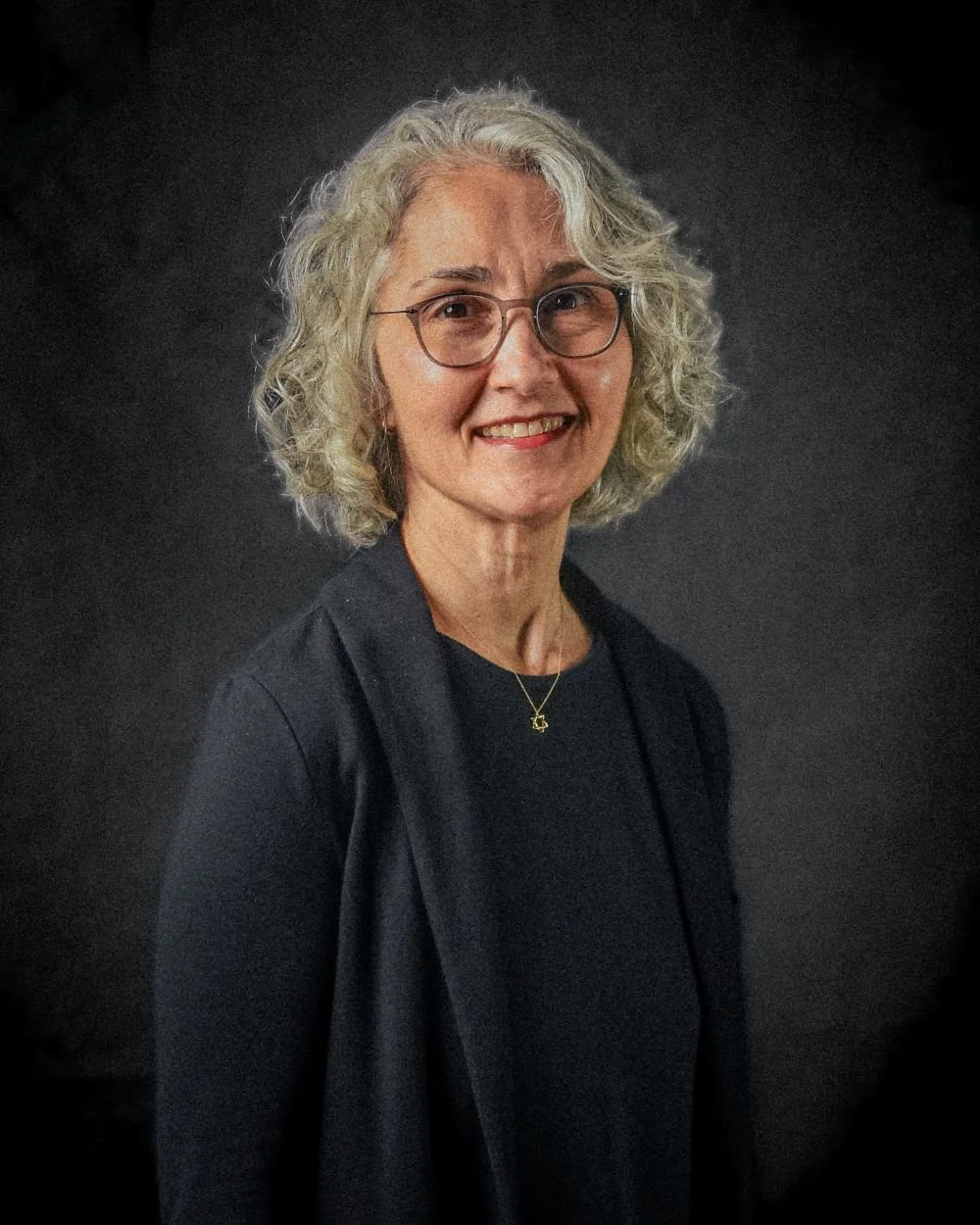
FEBRUARY WORKSHOP- Deborah Cabaniss, MD: What Therapists Mourn- An Interactive Workshop
$120.00
What Therapists Mourn: An Interactive Workshop
Give sorrow words. The grief that does not speak
Whispers the o’erfraught heart and bids it break.
— Macbeth
Date: Saturday, February 27th, 2027 9AM-2PM
Credits: 4 CE
Speaker: Deborah Cabaniss, MD
Meeting is both on Zoom & in-person at:
**HIGHLY ENCOURAGED IN PERSON PARTICIPATION FOR EXPERIENCE**
The Center for Integrative Counseling & Psychology
4305 MacArthur Ave.
Dallas, TX 75209
In this interactive workshop, we will explore our general feelings about mourning, with a focus on the many things we mourn as therapists. We will review a model for thinking about mourning and then speak to one another about how and what we mourn during our clinical work. In our clinical practice, we continuously need to adjust to a reality that is not necessary what we hoped for. This is the work of mourning that we, as therapists, can learn to practice every day.
GAP IN KNOWLEDGE:
As therapists, we are generally taught about mourning from the perspective of the people with whom we work. This is often in the setting of loss of a loved one. Depending on our training, we may have studied this from multiple perspectives, including scientific, psychological, psychoanalytic, religious, and philosophical. Much more rarely, however, do we talk about the things that we, as therapists, mourn in the everyday work of clinical practice.
LEARNING OBJECTIVES:
Afterparticipating in this interactive workshop, participants will
1. Be able to articulate many of the things that they, as therapists, mourn in clinical practice;
2. Be able to outline a model for thinking about the process of mourning
3. Feel more comfortable talking and thinking about their own process of mourning in clinical practice, and begin to think about developing a regular practice of mourning to enhance their clinical work.
PRESENTER BIOGRAPHY:
Deborah L. Cabaniss, M.D. is Professor Emerita of Clinical Psychiatry at the Columbia University College of Physicians and Surgeons. Until June of 2025, she was Associate Director of Residency Training in the Columbia Department of Psychiatry. She received her BA from Yale, her MD from Columbia, and completed her psychoanalytic training at Columbia. She has won numerous teaching awards and has over 60 publications related to psychotherapy education. In addition to her work in the US, Dr. Cabaniss has lectured and taught in Sweden, Norway, Japan, Korea and Canada, and her books, “Psychodynamic Psychotherapy: A Clinical Manual,” “Psychodynamic Formulation: An Expanded Approach,” and “Different Patients; Different Therapies” are used widely across the US and abroad. She is in private practice in Manhattan.
REFERENCES:
1. Parens, H (2001). We All Mourn: C’est La Condition Humane. In Akhtar, S (ed). Three Faces of Mouning, Jason Aronson, North Bergen NJ.
2. O’Connor, MF (2023). The Grieving Brain. Harper Collins, NY.
3. Alberini CM, Ledoux JE. Memory reconsolidation. Curr Biol. 2013 Sep 9;23(17):R746-50. doi: 10.1016/j.cub.2013.06.046. PMID: 24028957.

APRIL WORKSHOP- Aisha Abbasi, MD: Developing a Stable Internal Home- Implications for Analytic Technique, Adult Development, and Geographic Relocations
$120.00
Developing a Stable Internal Home: Implications for Analytic Technique, Adult Development, and Geographic Relocations
Our remedies oft in ourselves do lie
— All’s Well That Ends Well
Date: Saturday, April 17th, 2027 9AM-2PM
Credits: 4 CE
Speaker: Aisha Abbasi, MD
Meeting is both on Zoom & in-person at:
The Center for Integrative Counseling & Psychology
4305 MacArthur Ave.
Dallas, TX 75209
In this paper, Dr. Abbasi discusses the theoretical framework that informs our current understanding of homesickness and nostalgia. She outlines developmental factors that affect the evolution, emergence, and at times, the persistence of these feelings.
Using clinical vignettes from her work, she demonstrates how and why the sense of homesickness / nostalgia , emerges in therapeutic work at the time when it does, and the challenges and opportunities it presents, both for the patient and the analyst.
Dr. Abbasi also shares with us her evolving understanding of her own feelings of homesickness, following two major immigrations in her life: one, when she moved from Pakistan to the USA in 1987; and the other, when she moved from Michigan to Portland, Oregon, in 2023. She delineates the intrapsychic work involved in such a process, and postulates that such work gives rise to the development of a new and more stable internal home within one’s mind.
She elaborates on the implications of this idea for analytic technique, especially as patients consider ending their work with the analyst. She also sees this as an important aspect of adult maturation and growth, one that is profoundly helpful during relocations, both local and distant, that many adults go through.
Building upon Mahler’s description of the first separation-individuation phase of toddlerhood, Blos’ understanding of adolescence as a second individuation, and Akhtar’s insights about immigration as a third individuation, Dr. Abbasi suggests that the development of a stable internal home in one’s mind, during mid to late adult life, is akin to a fourth individuation process within the self.
GAP IN KNOWLEDGE:
There exists a notable practice gap among mental health professionals regarding the clinical significance and therapeutic utility of the concepts of homesickness and nostalgia. This paper addresses this gap by providing a comprehensive psychoanalytic framework that situates homesickness and nostalgia within normal developmental processes across the lifespan, offering ways to understand these feelings as an opportunity for psychological growth and the development of what Dr. Abbasi terms an "internal home"—a process essential to adult maturation and individuation.
LEARNING OBJECTIVES:
Attendees will be able to demonstrate a psychological understanding of the concept of homesickness and utilize it in therapeutic work.
Attendees will be able to identify different forms of nostalgia patients present with and be prepared to analyze such nostalgia for the benefit of the patient.
Attendees will be able to discuss the concept of developing a stable internal home in one’s mind, and its significance for therapeutic technique and adult development.
PRESENTER BIOGRAPHY:
Dr. Aisha Abbasi is a dedicated psychoanalyst whose clinical practice spans both in-person and remote work across Portland, Oregon, California, Washington, New York, Michigan, and Florida. She was educated as an analyst at the Michigan Psychoanalytic Institute (MPI), where she served as a Training and Supervising Analyst until 2023. She's now a Geographic Rule Training and Supervising Analyst at the Florida Psychoanalytic Center (FPC) and a member of its National Faculty. She's also a Supervising Analyst for the Seattle Psychoanalytic Society and Institute (SPSI). She brings three decades of experience in guiding the next generation of psychoanalytic clinicians.
Dr. Abbasi is the Founder ( since 2025) of Let’s Talk Psychoanalysis, an online platform with educational offerings for all who have a serious interest in psychoanalytic ideas.
Dr. Abbasi serves on the boards of the Psychoanalytic Quarterly (as Secretary) and the Tampa Bay Psychoanalytic Society (TBPS). Her professional affiliations extend to the Oregon Psychoanalytic Center, and a co-facilitator role in the Group for Analysts of South Asian Origin.
The author of The Rupture of Serenity: External Intrusions and Psychoanalytic Technique and co-editor of Privacy: Developmental, Cultural, and Clinical Realms, Dr. Abbasi is renowned for her insightful integration of cultural context, developmental theory, and technical precision. Her dedication to both patient care and psychoanalytic training makes her a valued mentor, scholar, and clinician in the psychoanalytic community. She's also a published poet in her native language Urdu.
REFERENCES:
1 Colombo, D. (2017) The Analyst's Relocation: Analysis Terminable, Interminable, and Dislocated. Psychoanalytic Quarterly 86:45-73
2 Davies, J. E. (2021) Intimate Solitudes: Unique Qualities of Psychoanalysis by Telephone. Psychoanalytic Perspectives 18:189-207
3 Mendes, D. (2022) Where is My Mother? Childhood Trauma and the Configuration of the Self. Psychoanalytic Dialogues 32:294-311
DSPP Arts